It took some trial and error to find the best settings for my new kiln. There are *so* many possibilities, but not everything produces the effect I’m aiming for. That meant experimenting, adjusting, testing again—and then doing it all over. But it looks like I’ve finally found a program that works.

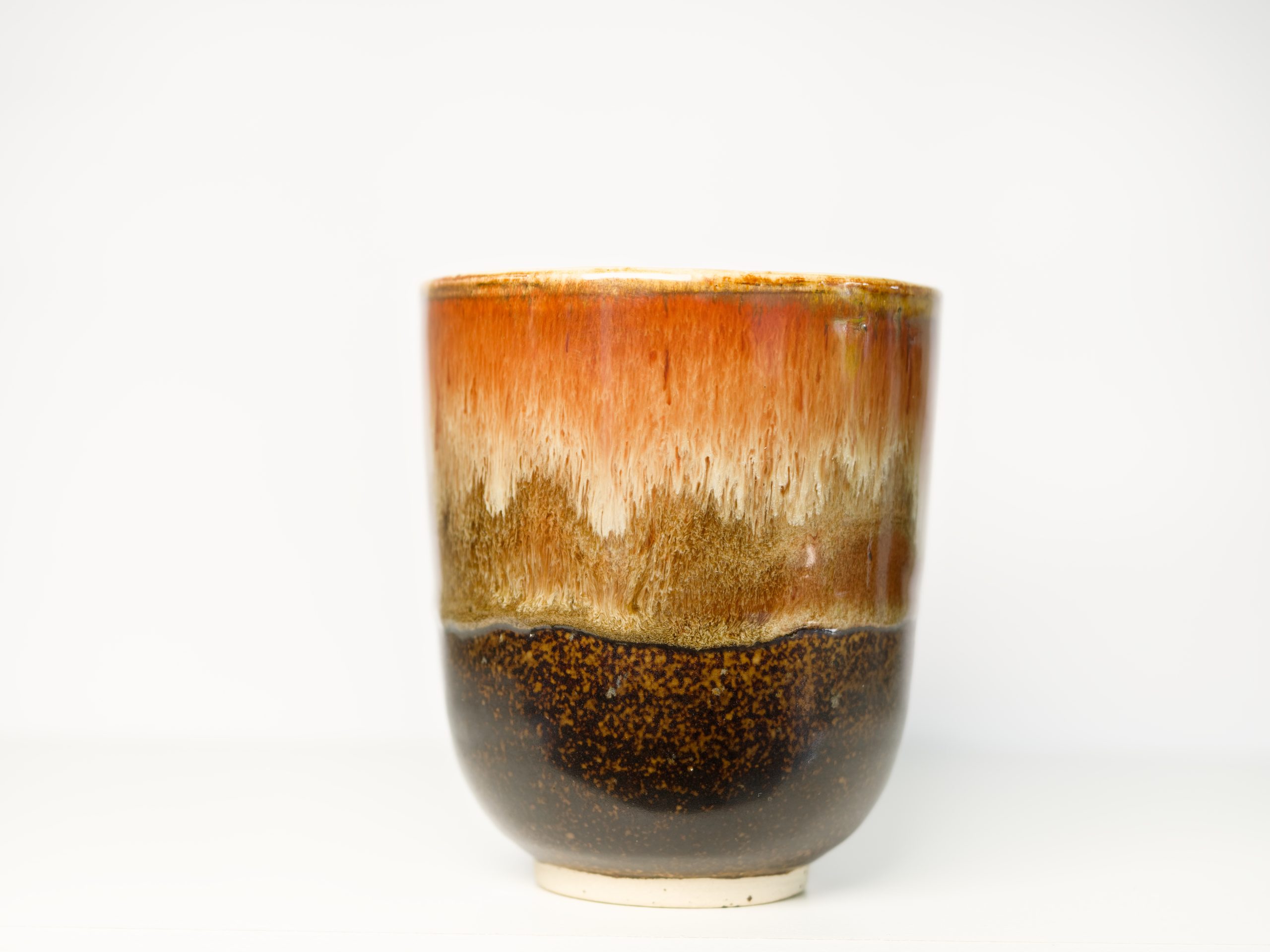
The results of the latest firing were truly something to be happy about. Glazes that finally behaved the way I’d hoped, and a finished result I can look at with genuine satisfaction. Among other things, a few mugs came out of the kiln that I was especially pleased wit
"For this design, I was guided by warm, earthy tones — the mugs carry a subtle autumn atmosphere. What that evokes, I gladly leave to the viewer. Because autumn is sometimes found in more than just color.
Experimenting and Monitoring
With this kind of firing, I don’t rely solely on intuition but also on clear control mechanisms. One of the tools I always trust are *self-supporting cones* (free-standing pyrometric cones). These cones are made from a material that melts at a specific temperature, and they gradually bend when both the temperature and the duration of the firing have been correctly reached.

Self-supporting cones, from left to right showing the different tests in the kiln. Slowly working towards a satisfying result..
So they don’t just indicate the peak temperature but also give an impression of how long the clay and glaze have been exposed to that temperature. Ideal, because kilns can sometimes vary by a few degrees from what the display shows. Thanks to these cones, I know exactly when a piece is truly ready at the right moment — and that makes the difference between ‘almost right’ and ‘perfect.’
 English
  Dutch
Dutch