From Clay to Shape: The Beginning of Every Piece
It all starts with the clay. This innocent, raw material forms the foundation for everything that follows. Stoneware clay is my favorite choice, a type of clay that becomes hard and sturdy after firing, with a matte and subtle finish. It’s versatile and suitable for both functional and decorative pieces. Shaping the clay is a process that requires a lot of patience and care. Sometimes the work is turned on the wheel, other times it is hand-built, depending on the design. Every movement matters, every touch adds more character to the piece.


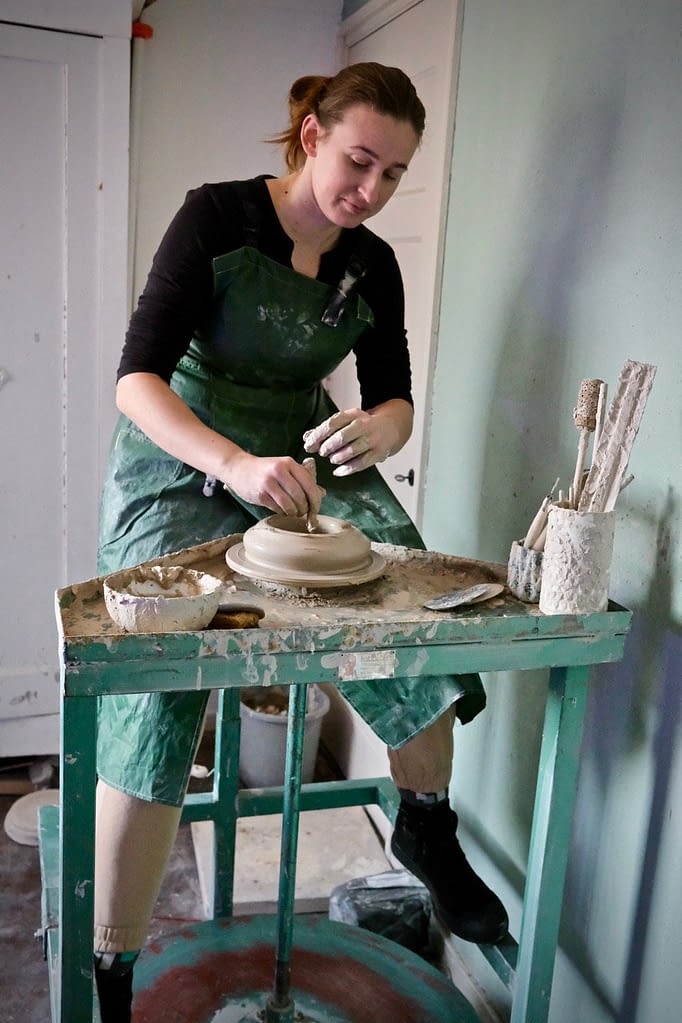
When creating a ceramic piece, you don't just start by shaping a ball of clay. There is so much more to the technique and the feel of the maker behind it. You can’t rush the clay, and that applies to the entire process. I pay close attention to getting the texture right, ensuring the finish is clean, and making sure the proportions are correct. This is where the piece begins to develop its unique character – it's the foundation for everything that follows. It’s fascinating how the clay adapts to my hands and ideas, and I notice that each piece chooses its own path. This is the foundation of every ceramic work, and it requires a great deal of focus and dedication.
The Drying Process: Patience is Key
Once the shape is formed, the patient waiting begins. This is one of the hardest parts of the process: the drying stage. The ceramic pieces must dry slowly to prevent cracking or warping. This often takes several days. During this time, the pieces are placed in a safe, well-ventilated area, away from direct sunlight to avoid uneven drying.
Why does this take so long? Simple: clay contains water, and that water needs to be removed for the material to become strong and suitable for the kiln. A piece that dries too quickly is highly likely to crack. That’s why it’s important to maintain consistent humidity, control the temperature, and allow the piece enough time to settle. This process can sometimes be frustrating, especially when I’m working with just one or two pieces at a time, but it’s essential to get it right. And honestly, it’s also a time for reflection – I use this time to think over the finishing touches and plan out the next steps for the piece.
Bisque Firing: The Magic of the First Kiln Round
When the ceramics are fully dry, they go into the kiln for the first time. This is the *bisque firing*, the moment when the clay reaches its final hardness. During this stage, the ceramics are slowly heated to about 900°C in the kiln, and here, a miracle happens: the clay loses its porosity and becomes hard and sturdy. The pores close, and the piece takes on its "permanent form," ready for glazing.
Het proces van de bisque bak is cruciaal. Het is niet zomaar een opwarming – de temperatuur moet exact gecontroleerd worden. Te snel verwarmen kan het keramiek doen barsten, te langzaam kan de kleur en structuur beïnvloeden. Daarom moet ik mijn ovens – Hete Freek en Firey Fred – goed in de gaten houden. De temperatuur moet langzaam opbouwen, zodat alles gelijkmatig wordt gebakken. Hier komt mijn favoriete onderdeel van het proces: het “cones” gebruik. Cones zijn kleine kegels die smelten bij bepaalde temperaturen en me vertellen wanneer de oven de juiste temperatuur heeft bereikt. Ze geven me de controle die ik nodig heb om te weten dat alles goed verloopt. Het is bijna als het volgen van een geheime code!


Glazing: A Brush, A Vision, A Surprise
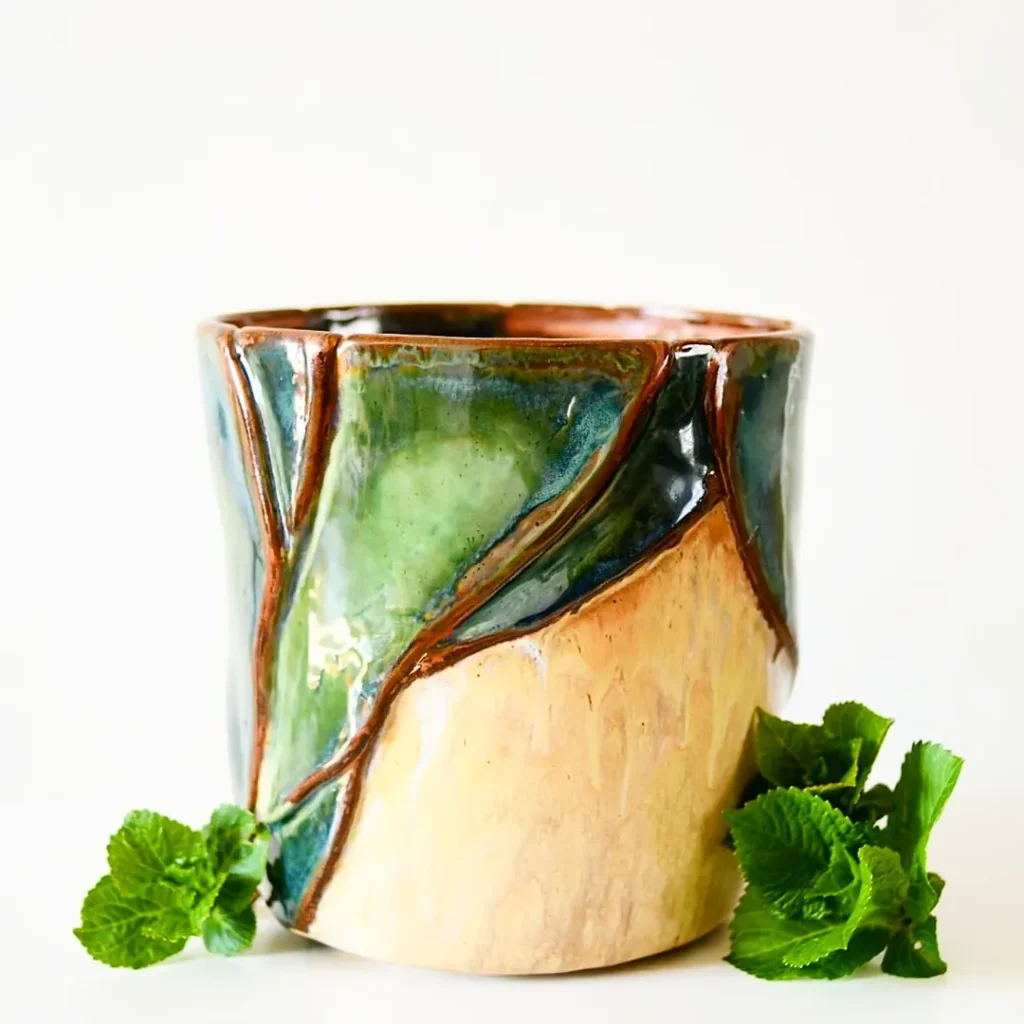
Glazing is my favorite phase of the process, and at the same time, the most unpredictable. This is where the clay gets its final appearance – and where everything can change. Unlike spray glazing, I use a brush to apply the glaze carefully, layer by layer. Each piece gets its own unique finish, depending on how much glaze is applied, how thick the layers are, and the technique used with the brush.
Applying glaze is a delicate art. Each layer must contain exactly the right amount of glaze, and this can only be achieved by handling the brush with patience and attention. With brush glazing, every stroke is visible, which makes the process very direct and tangible. This is also the phase where small variations or choices in technique can lead to surprising results – and that’s what makes it exciting! Even when I use the same glaze, the way it behaves on the surface of the ceramics can vary significantly, depending on the temperature and the glaze layer.
It’s always a bit of an experiment – and that’s what makes it so fascinating. Sometimes the result isn’t exactly what I expected, but that doesn’t mean it’s not beautiful. It’s always an adventure, and it makes it exciting every time to pull the ceramics out of the kiln.


The Kiln: Where Magic and Science Meet
Het bakproces in Hete Freek en Firey Fred is zowel een kunst als wetenschap. De ovens zijn cruciaal om de gewenste afwerking te bereiken, en het blijft altijd een kwestie van precisie. Nadat het glazuur is aangebracht, gaat het keramiek voor de tweede keer de oven in, dit keer op een hogere temperatuur van ongeveer 1230°C. Hier komt de ware magie van het glazuur tot leven. Het smelt, druipt en vormt een hard, glanzend oppervlak.
The magic of the kiln isn’t just magic – it’s science. Cones help me reach the right temperature, but even then, it can still be a surprise how the ceramics behave. Small variations in temperature or how the air circulates in the kiln can completely change the final result. It’s always a bit of a gamble, but that’s what makes it exciting. Sometimes you get exactly what you expected, other times you’re surprised by an unexpected, beautiful effect.
Out of the Kiln: The Unknown Revealed
The moments after firing are always the most exciting. When I open the kiln, I can never say with certainty how the ceramics will turn out. Sometimes the glaze is exactly as I had hoped, other times it’s an entirely new discovery that takes my design in a different direction. The colors might be deeper or lighter than expected, the gloss could be different, and sometimes there’s even a "mistake" that ends up creating something unexpectedly beautiful.
This phase is the most beautiful part of the entire process: the revelation. What I hold in my hands is no longer just an idea, but an object that has been completely transformed by the heat of the kiln and the glaze. It’s always a moment of pure surprise and admiration for the power of nature and science working together in the kiln.


Finishing Touches: The Final Detail
The final step is the finishing. Once the ceramics come out of the kiln, they receive their last details. Sometimes it’s smoothed or polished, sometimes a small signature is added. This is the moment when the piece takes on its final character, and I do the final check. It’s also when small imperfections – a scratch, an unevenness – give the piece its unique charm.
Finishing is the moment when everything comes together. The piece is no longer just an idea; it is an object that has taken on a life of its own, and now it’s ready to enter the world.
Conclusion: The Time-Intensive Process of Creation
Making ceramics is an intensive, time-consuming, and beautiful process. From shaping the clay to glazing, from firing in Hete Freek and Firey Fred to revealing the final result, each step is filled with patience, precision, and unexpected surprises. It’s the unpredictability that makes it so captivating – you never quite know what you’ll get, but that’s the beauty of ceramics. Each piece is unique, and the final result is always worth it, no matter the challenges you encounter.
 English
  Dutch
Dutch